The Cube Puzzle for Kids
Solving a cube puzzle is a brilliant thing to learn. It looks impossible, but you only need to learn a few short moves and practise them. Lots of children can solve one, some as young as six or seven!
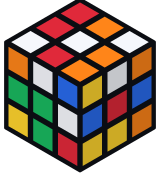
Start here
- Play with the 3D cube first. Turn it, mix it and get a feel for how the pieces move. You can’t break it, and you can press Reset any time.
- Learn the letters. R means turn the right side, U means turn the top. There is a quick guide here.
- Follow the 7 steps. Our beginner’s guide builds the cube one layer at a time, with pictures for every step.
- Practise one step at a time. The trainer gives you a cube to practise each step and tells you when you have done it right.
Your first move to learn
Right up, top left, right down, top right. Try it six times and see what happens!
Say it like a little song: “right up, top, right down, top back”. You will use this move in lots of steps.
Top tips
- Look at the centres. The middle sticker on each side never moves. If the middle is red, that whole side will be red when it’s solved.
- Go slowly. Speed comes later. Doing a move carefully is better than doing it fast and wrong.
- Take breaks. If you get stuck, stop and come back tomorrow. Your brain keeps learning while you rest.
- It is normal to mess up. Everyone does. Use the solver to get back on track, then try again.
- Teach a friend. Explaining the steps helps you remember them.
How long will it take?
Most kids can learn the whole thing in a few days or a couple of weeks, practising a little each day. Your first solve might take a long time. That’s fine! After a while, two or three minutes is a great time. The world’s fastest solvers take under four seconds.
Fun facts
- There are over 43 quintillion ways to mix up a cube. That’s 43 followed by 18 zeros! Find out more.
- Any mixed-up cube can be solved in 20 moves or fewer, if you know the perfect moves. This is called God’s number.
- The puzzle was invented in 1974 in Hungary. Read its history.
For grown-ups
Everything in the cube section works without an account or sign-up, there is no chat and no way to contact other players, and practice progress is only saved in the browser on your device. Real cubes contain small parts that can come loose, so take care with very young children. Teachers might like our classroom ideas.
Questions people ask
What age can a child solve a Rubik’s cube?
Many children manage it from about 7 or 8 with a beginner’s guide and some help. Some start younger. There is no lower limit if they enjoy it.
Is the cube good for kids’ brains?
It practises memory, patience, spatial thinking (picturing things in 3D) and following steps in order, which is useful in maths and computing.